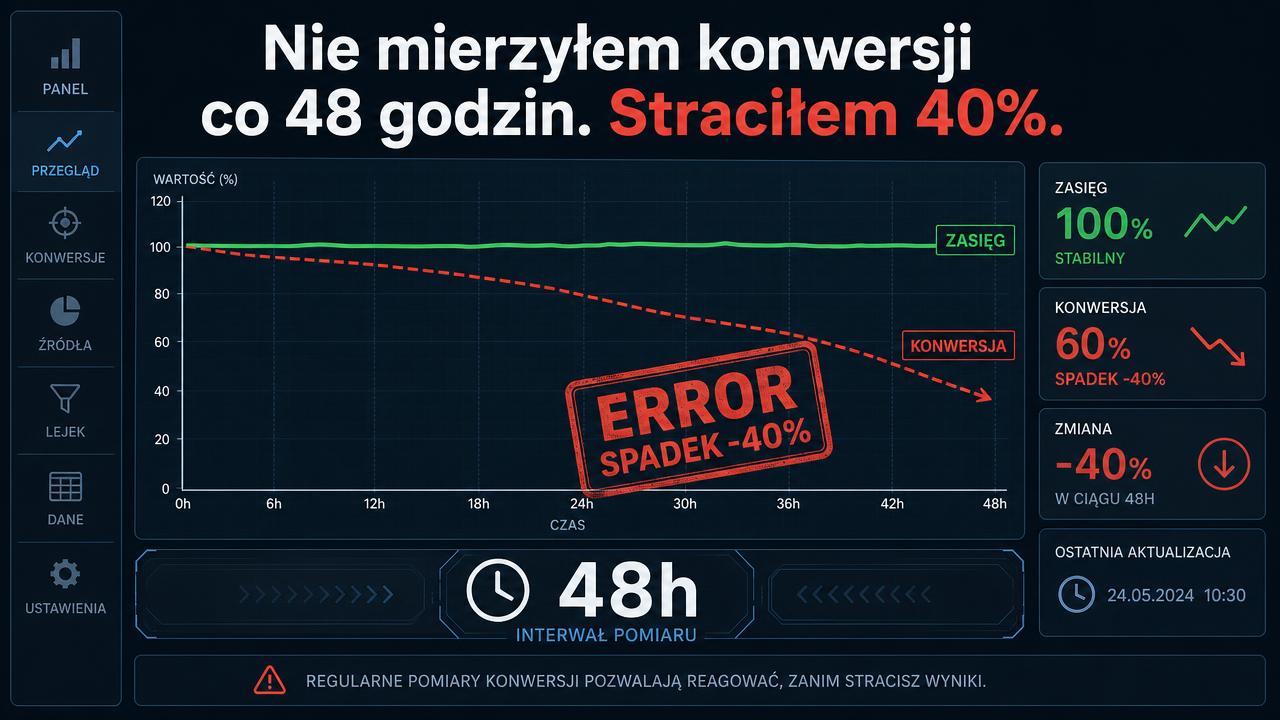
A 40 percent drop in follower conversion on a LinkedIn profile in July reveals a mechanism that paralyzes most founders of B2B SMEs selling advanced engineering systems. A founder mired in the daily grind must personally rescue sales, while marketing campaigns burn through the budget and generate messages that go straight to spam. Each unoptimized lead in the hardware and networking segment costs about $150; with 20 leads per month, that's $3,000 directly hitting the operating margin. As a result, the operating margin shrinks, and the time for strategic company management practically disappears.
Operational Context of B2B SMEs and the Mechanics of Founder-Led Sales
Selling advanced engineering systems requires communicating with seasoned engineers and maintenance managers who instantly reject corporate jargon and expect technical data, production case studies, and impact on MTBF or downtime costs. A study published in Sustainability (MDPI) shows that investment in digital marketing improves the financial performance of SMEs only when accompanied by digital maturity and effective data management. In practice, many companies rely for years on the founder's network and recommendations, outsourcing digital channels to agencies unfamiliar with the language of production.
Bip Ventures' report points to typical symptoms of this model: revenue plateaus, poor follow-up on warm leads, a pipeline based solely on the founder's personal contacts, and no time for management. SignalFire adds that building an effective outbound strategy takes at least two years, and the median time to reach $1 million ARR is 33 months. During this period, the founder continues to attend meetings from referrals because that's the only place they see real conversion, while having no time to optimize processes.
Agencies often send emails that sound like a primitive bot - and seasoned engineers immediately send them to spam. With a complaint rate above 0.3 percent, this lowers the sender's reputation and blocks normal correspondence with clients. Outreach documentation warns that a spam complaint rate above 0.3 percent lowers the sender's reputation and causes messages to be rejected. A Leadpipe report shows that the response rate for cold emails dropped from 5–8 percent in 2019 to 0.5–1.5 percent in 2026, and for an ICP of VP+ in companies with over 1000 employees, it can fall below 0.5 percent. LinkedIn remains a safer channel, as ignoring messages does not directly translate to a lower email domain reputation.
The July Follower Conversion Drop as a Signal of Lost Control
Seasonality is an excuse in this case - proprietary profile data shows that the real cause is the lack of systematic conversion measurement and reaction to changes. Analysis of your own LinkedIn profile data shows that the problem is the lack of systematic conversion measurement and reaction to changes. Linkedist confirms that well-designed campaigns can leverage summer user behaviors instead of succumbing to them.
NetSuite defines follower conversion as a hard link in the funnel that directly affects lead cost, CAC, and campaign profitability - it is an operational parameter, not a soft metric. When conversion drops and the ad budget remains constant, CAC increases. Monday.com emphasizes that key metrics like conversion rates, acquisition costs, and revenue attribution must be linked to budget reallocation, not just reporting.
LinkedIn is 277 percent more effective at generating leads than other social media. The average conversion rate for Lead Gen Forms is about 13 percent compared to 2.35 percent for typical landing pages (Sopro). The average CTR for sponsored content ranges from 0.44 to 0.65 percent, the global CPC is about $5.58, and the CPM is about $33.80 (The B2B House). In technology segments, CPL is increasing: Software & IT is about $125, and hardware & networking is about $150.
Inbound leads from LinkedIn close at a rate of about 14.6 percent, cold outreach at about 1.7 percent, and warm outreach at 5–8 percent (ConnectSafely). Warm outreach to identified website visitors achieves a 15–25 percent response rate (Leadpipe). These differences show that followers and engaged contacts are many times more valuable when a company measures and maintains their conversion.
A 40 percent drop in follower conversion should be interpreted exactly like a sudden drop in OEE on a production line or a sharp increase in the failure rate in a maintenance system - it's a signal that something in the system has changed, and the lack of a cyclical review has led to an accumulation of effects.
The 48-Hour Cycle as an Engineering Control Mechanism
Adobe Experience League recommends evaluating budget and targeting changes in 24–48 hour intervals because that's how long algorithms need to recalibrate. If there is no significant difference in conversion 48 hours after making changes to a campaign, the direction is wrong and requires immediate correction - without waiting for the end of the month and an agency report. A 48-hour analytical-optimization cycle allows you to link a drop in conversion to a specific change in the campaign, creative, targeting, or agency activity.
The SignalFire sales operating model requires a numerical representation of the funnel: number of leads, conversion to opportunities, average deal size, win rate, time to close, and implementation time. Such a model allows for revenue forecasting and indicates where the funnel is leaking.
In practice, this means a daily log: number of new followers, number of interactions, number of clicks on forms, number of completed forms, number of conversations started, and number of opportunities registered in the CRM. Every 48 hours, this data is used to calculate the current conversion of followers to leads and interactions to leads - and only these two ratios give the founder real managerial leverage. The lead-to-conversion ratio, the ratio of qualified leads to closed sales, is one of the key diagnostic indicators of the entire funnel. This rhythm gives the founder real managerial leverage and protects EBIT and time.
Regaining Control Over Margin and Time
Systematic measurement of follower conversion every 48 hours transforms marketing from a costly experiment into a stable sales machine. The founder stops putting out fires and starts managing data that directly affects the profitability of technical projects. The lead-to-conversion ratio becomes one of the key diagnostic indicators, and decisions are based on telemetry instead of intuition.
Tell us, when was the last time you checked the conversion on your profile, not just the reach?
This article was created with AGAPE's proprietary content machine AGAPE Liberty.
Frequently asked questions
Ready to evaluate fit?
Book a 25-minute discovery call and let's see if AGAPE is the right partner for your next campaign.
Schedule a 25-minute discovery call