The High Cost of a Broken Promise
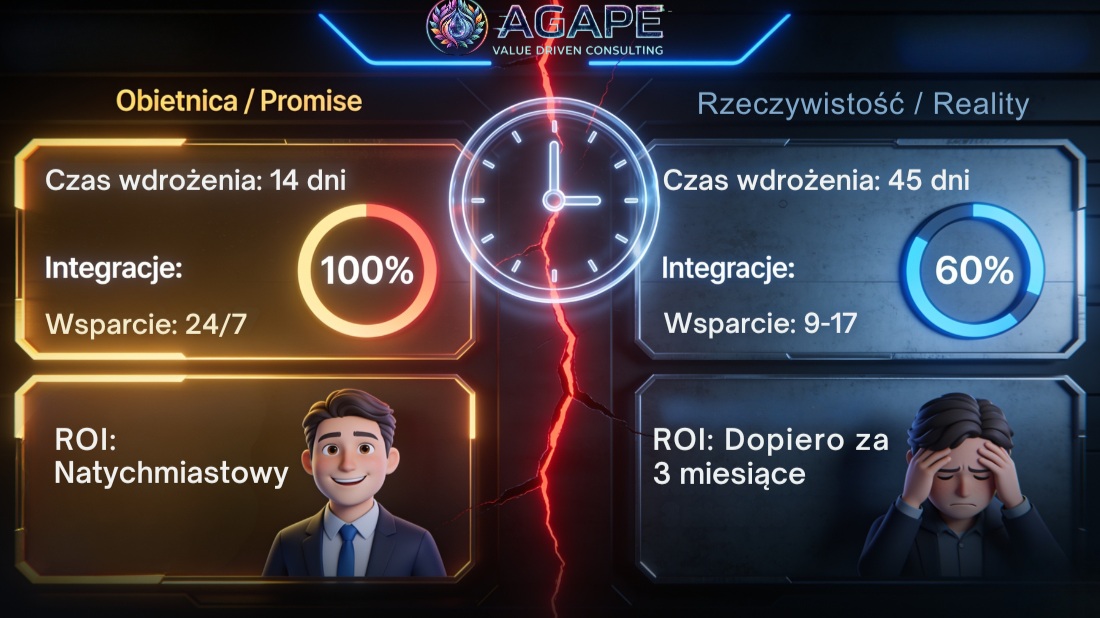
A salesperson who 'wins' a contract with an aggressive promise has, in reality, lost it for the company. The price for such a move is an overloaded delivery team, a disappointed client, and forfeited referrals. This pattern repeats regularly in SMEs within the B2B sales automation sector, where pressure to close deals compels sales teams to make declarations detached from actual operational capabilities.
A report from Maestro Group shows this bluntly:
- 54% of B2B decision-makers switch suppliers after just one bad experience.
- 76% of customer experience failures stem directly from a misalignment between the sales promise and the actual delivery.
When salespeople promise too much, delivery inevitably disappoints the client. This inconsistency forces business owners into crisis meetings to save relationships, pulling them away from strategic management. This personal time cost for the owner blocks growth and simultaneously increases churn. The data is clear: up to 75% of SaaS users may abandon a product in the first week if the onboarding is chaotic and inadequate to the expectations set during the sales process.
The Origin and Nuance of the Principle
The 'under-promise, over-deliver' principle entered the management lexicon in the late 1980s when Tom Peters described it as a way to build customer trust by deliberately lowering promises and then exceeding them in execution. Originally, it was a response to a culture of marketing hype that frustrated customers in industries requiring complex integration.
However, in modern business, this principle is sometimes distorted. Dan Mall argues that systematically under-promising teaches the client to expect less and, over time, undermines the supplier's credibility. Similarly, the TopSecrets institute emphasizes that clients value predictability over the effect of surprise.
From this debate, a clear framework of three strategies emerges:
- Over-promise, under-deliver: Destroys trust through disappointment.
- Promise and deliver: Builds predictability and a secure relationship.
- Reasonable under-promise, over-deliver: The promise is consciously set below the average success rate, and delivery then lands slightly above that promise. This provides a safe buffer for operational risks.
At AGAPE, we apply this third strategy. It allows for a repeatable, positive surprise for the client without teaching them that every word is intentionally understated.
The Psychology of Expectations in B2B
Customer satisfaction depends on the difference between what was promised and what was actually delivered. When the promise is aggressive and the delivery is average, the effect is destructive. When the promise is realistic and the delivery is slightly better, the client experiences a positive surprise, which builds trust and makes them more likely to recommend the supplier.
Companies that consistently deliver a little more than they promised record significantly higher retention, a higher lifetime value (LTV), and a greater share of referrals with a lower customer acquisition cost (CAC). This is confirmed by NPS benchmarks in B2B customer experience programs. Systematically collecting feedback and reacting to discrepancies allows for the identification of detractors and the activation of a referral mechanism. According to Impact.com, B2B decision-makers increasingly trust peer recommendations, making promoters a direct source of growth.
A Framework for Calibrating Promises
Building trust requires implementing a consistent process across three stages:
Stage 1: Presales
- Sales teams define the promise at the most likely level of success, not the best-case scenario. This means incorporating operational risks and limitations directly into the conversation.
- Clearly communicate resource and timeline constraints from the start.
Stage 2: Onboarding
- The delivery team communicates a realistic schedule and scope, then adds small but significant elements beyond the initial promise (e.g., faster integration, a proactive post-launch review).
- Define roles on both sides and establish clear escalation paths from day one.
Stage 3: Ongoing Collaboration
- Systematically compare declarations with results on a regular basis (e.g., monthly).
- This allows for early detection and correction of issues before they can damage your reputation.
This framework effectively eliminates the gap between sales promises and delivery reality, builds predictability, and generates referrals. At AGAPE, we apply this by offering a 3-month pilot as a form of a realistic promise, which we then exceed in practice. The question is: do you have the hard data to honestly assess if your promises align with your delivery?
This article was created with AGAPE's proprietary content machine AGAPE Liberty.
Frequently asked questions
Ready to evaluate fit?
Book a 25-minute discovery call and let's see if AGAPE is the right partner for your next campaign.
Schedule a 25-minute discovery call