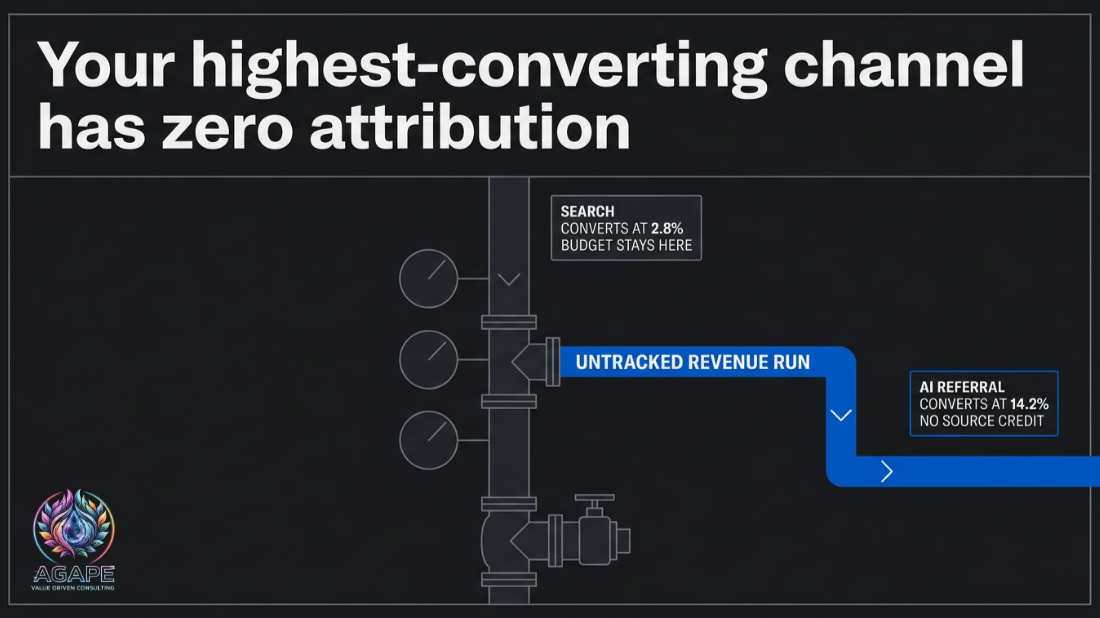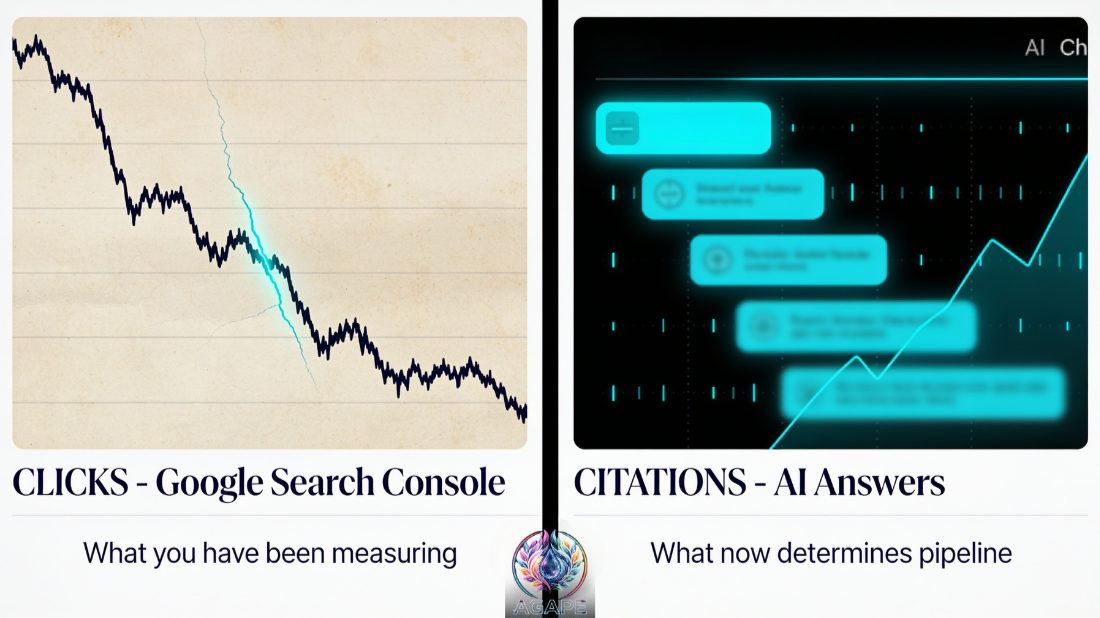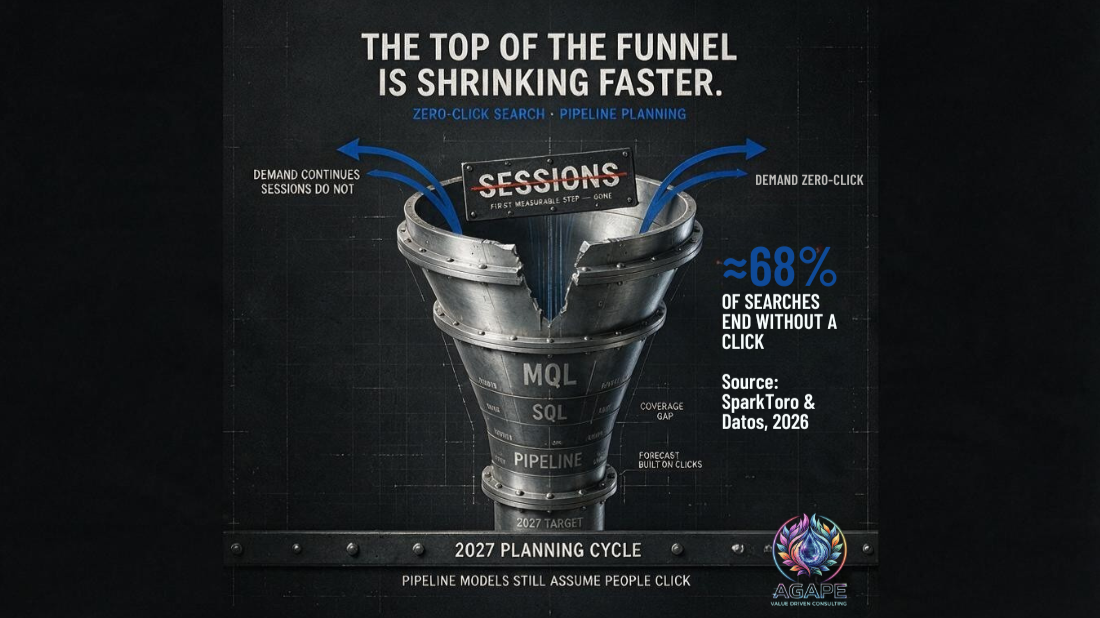
Your buyers now ask an assistant before they click. If your brand isn’t cited in the shortlists and summaries those assistants produce, you’re invisible at the very moment decisions form. That’s risk—and opportunity—because the brands that do appear are framing the answer and capturing demand long before the SERP.
This guide defines AI search visibility, shows how to measure it this week, and prioritizes fixes that raise brand citations within 2–8 weeks. You’ll leave with a baseline workflow, clear metrics, and a practical playbook for answer-first content, entity clarity, and structured data that move the needle in assistants and AI Overviews.
Expect some differences versus classical SEO: rankings remain a vital feeder, but visibility here is about being used as a source. Answer-first content and unambiguous entities are your fastest levers. You’ll run a lightweight manual audit, use a free checker for a baseline, and stand up a monitoring cadence your team can own without new headcount.
Key takeaways
- AI visibility is binary: you’re either cited in an answer or not. Rankings help, but they don’t guarantee inclusion.
- Click-through can drop where AI Overviews appear; offset it by being the cited source and protecting conversions even as traffic shifts.
- Entity clarity plus answer‑first content plus structured data are the fastest controllable levers for citability.
- You can baseline in under an hour using a free checker and manual prompts, then iterate weekly; meaningful gains often surface within 2–8 weeks.
What is AI search visibility?
AI search visibility is the frequency and quality of your brand’s appearances or citations inside AI‑generated answers across assistants and AI features. It’s not just about blue‑link rankings; the central question is whether your content is used in the answer.
That shift matters because AI Overviews and assistants are increasingly the first touchpoint in user journeys. Their presence correlates with lower CTR in classic SERPs, so being the cited source mitigates lost clicks and sustains pipeline health. For B2B teams, the scope spans assistants (ChatGPT, Gemini, Claude, Perplexity) and search features (AI Overviews/AI Mode) that your buyers consult at problem definition, solution exploration, and vendor shortlisting.
The goal: become the referenced authority when a buyer asks “which,” “how,” or “who to choose,” regardless of whether they ever click a traditional result.
How AI Overviews and assistants choose sources
Assistants favor authoritative, well‑structured, answer‑first passages with clear attribution. Lead sections that resolve the query directly increase the chance that your wording becomes the quoted snippet.
Structured data is a force multiplier. Marking up Organization, Product/Service, FAQPage, and Review with JSON‑LD gives AIs unambiguous signals about who you are, what you offer, and which claims belong to you, improving extraction and entity alignment.
Classical SEO still feeds AI visibility. Many first‑position AI Overview citations originate from the top three organic results, so technical excellence and query‑fit content remain prerequisites. Meanwhile, user behavior is evolving: impressions can rise while clicks fall. Your target outcome is to be the attributed source inside AI cards and summaries so you capture demand without relying solely on click volume.
Build your baseline in one afternoon
You don’t need paid tools to quantify where you stand today.
- Run a free AI visibility check: Use a free checker to capture mentions and citations across major assistants. Save screenshots and export results to establish your week‑zero baseline. You can use it three times per day without registration.
- Create a buyer‑truth prompt set: Write 10–20 prompts that mirror real buyer queries across the funnel: problem (“how to…”), solution (“best way to…”), comparison (“X vs Y”), and vendor shortlists (“top [category] in [market]”). Ask assistants and note if you appear, how you’re described, and which URLs are attributed.
- Score it simply: For each prompt, assign 1 if your brand appears (0 if not). Tag polarity (recommendation vs neutral mention) and whether the citation links to your domain. This yields a quick Presence Rate and a directional Share of Voice.
- Localize if needed: If you sell across markets, repeat prompts per locale. Coverage of AI Overviews varies by market; in Polish Google, 24.17% of queries currently trigger AI Overviews.
Archive everything in a spreadsheet with timestamps and screenshots. This becomes your trending dataset for the next sprint.
Metrics that matter (and how to compute them)
Standardize a small, durable set of metrics your team can trend weekly and brief executives on.
- Presence Rate: Percentage of tracked prompts where your brand is present. Weight prompts by funnel stage to reflect revenue impact. Formula: Present Prompts / Total Tracked Prompts.
- Citation Quality: Proportion of appearances with clickable attribution to your domain (vs third‑party profiles). Tie this to sessions and assisted conversions to quantify owned‑traffic impact. Formula: Attributed to Domain / Total Appearances.
- SERP/AIO Overlap: Track when you rank in the top three organically and when that converts into AI Overview citations. A significant share of first‑slot AIO mentions come from top‑3 organic results, so watch the conversion rate from rank to citation.
- Engagement health benchmarks: Expect AI‑sourced sessions to exhibit stronger engagement when relevance is high: bounce rate can be 27% lower and visit duration 38% longer than other channels in observed datasets. Use these as sanity checks when attribution is noisy.
Build these into a simple dashboard: a Presence Rate line chart, a Citation Quality bar, an overlap table for target pages, and engagement deltas for AI‑referred sessions.
Answer‑first content that wins citations
Turn current pages into AI‑ready, quotable sources through structure and clarity.
- Lead with the answer: Open key pages and sections with a two‑sentence, claim‑forward summary that directly addresses the query. This is the most liftable passage for assistants.
- Chunk knowledge cleanly: Use Q&A blocks, bulleted lists, and small comparison tables so AIs can extract discrete, reusable facts without misattribution.
- Ground your claims: Anchor key statements with visible sources or first‑party data and maintain consistent entity naming (company, product, personas) across copy and metadata.
- Fill shortlist gaps: Where buyers expect “best,” “top,” or “vendors” lists, add clear shortlists and neutral, factual comparisons that include your brand where appropriate. Align H2/H3 headings to natural buyer questions so assistants can map them.
Treat pages less like essays and more like answer libraries: concise, structured, and immediately useful.
Entity clarity and structured data
Make your brand machine‑readable so assistants can connect the right facts to the right entity.
- Implement core schemas: Add JSON‑LD for Organization, Person (authors), Product/Service, FAQPage, and Review to describe your brand, people, offers, and proof points.
- Keep identity consistent: Ensure the same name, address, and phone (NAP) and consistent naming across your website, Business Profiles, social channels, and directories. Assistants reconcile conflicts harshly.
- Map your entity graph: Create a clear internal linking pattern—homepage → category → solution → case study → author bio—using descriptive anchors to establish topical authority and lineage.
- Validate and unblock: Test your markup and fix any crawl blocks. Assistants depend on crawlable, structured sources, and indexation remains a prerequisite for inclusion in AI Overviews.
When in doubt, simplify names, unify labels, and clarify relationships. Ambiguity erodes citability.
Technical foundations for AI discovery
Keep the technical doors open for both search crawlers and AI bots.
- Prioritize speed and indexability: Maintain fast, stable pages, clean canonicals, and an indexable information architecture. Featured snippets and top‑3 rankings remain feeders for AI Overview citations.
- Skip myths; double down on clarity: You don’t need gimmicky chunking. Focus on clean headings, tight intros, and descriptive media with alt text that reinforces the topic.
- Confirm bot access: Monitor robots.txt, meta directives, and any bot‑management layers so you’re not unintentionally blocking assistants you depend on for discovery and recommendations.
- Track shifts pragmatically: On terms where AI Overviews appear, CTR often declines while impressions and conversion rate stay steadier. Build KPI guardrails that reflect this reality.
Technical excellence doesn’t win by itself—but without it, you won’t even be in the pool of eligible sources.
AI visibility audit: a 10‑step workflow
Use this repeatable workflow quarterly (and lightly each week) to expose gaps and ship improvements.
- Inventory prompts: Prioritize queries by estimated revenue impact; tag by funnel stage and audience.
- Baseline: Collect appearances with the free checker and manual prompts; store evidence, notes, and links from each assistant session.
- Map to canonical pages: Assign each priority prompt to a canonical page owner; avoid duplicate targets that dilute authority.
- Add answer‑first blocks: Insert two‑sentence, claim‑forward summaries at the top of each page section that maps to a buyer question.
- Install/repair Schema.org: Add Organization, Product/Service, FAQPage, Review, and author schema; validate with testing tools and live result checks.
- Secure third‑party validation: Pursue authoritative citations and reviews so assistants can corroborate your claims beyond first‑party pages.
- Harden technicals: Improve speed, ensure indexability, and verify bot access; monitor crawl logs for assistant and AI agent hits where available.
- Re‑test weekly: First visible uplifts often appear within 2–8 weeks post‑indexation. Keep snapshots for before/after comparisons.
- Analyze overlap: Track when top‑3 organic rankings translate into AI Overview citations; tune on‑page intros and schema on those pages first.
- Document experiments: A/B test rewritten intros, FAQ additions, and schema refinements; correlate changes to Presence Rate and Citation Quality.
Assign owners and due dates for each step. Treat it like a product sprint, not a one‑off task.
Channel‑specific playbooks
Translate the principles into practical moves per channel your buyers actually use.
- AI Overviews/AI Mode (Google): Publish comprehensive, well‑structured guides with explicit answer summaries at the top. Aim for top‑3 organic placement to maximize citation odds, then tune answer‑first intros and schema to convert rank into inclusion.
- ChatGPT, Claude, Gemini, Perplexity: Ship concise, source‑rich explainers and vendor comparisons. Track whether assistants cite your domain versus third‑party profiles; prioritize upgrades on pages that get mentioned without a direct link.
- Local and B2B: Keep Business Profiles pristine and aligned with on‑site schema for services, service areas, and reviews. This resolves local intent for assistants that blend directory and web signals.
- International: Localize entity attributes (names, addresses, currencies) and prompts by market. Prevalence of AI Overviews differs by locale; in Polish Google it’s 24.17%, which changes the shape of your CTR and presence goals.
Focus where your demand is concentrated; expand only after you consistently win in your primary channel.
Monitoring cadence and reporting
Adopt a light, durable rhythm that survives roadmap shifts.
- Weekly: Re‑run the free checker for your top prompts; log Presence Rate, new citations, and a short sentiment snapshot for mentions.
- Bi‑weekly: Review AI‑sourced engagement; look for reduced bounce and longer sessions as quality signals. Benchmarks: −27% bounce and +38% duration versus other channels.
- Monthly: Publish a one‑page executive summary with top deltas, experiments shipped, and next moves. Annotate any major algorithm or UI changes that could explain swings.
- Quarterly: Refresh the prompt set and retire low‑value items. Recalibrate targets based on channel CTR dynamics and conversion stability.
Keep it simple and visual. Consistency outperforms complexity.
Managing the traffic shift without panic
Interpret KPI changes through the AI lens to keep teams focused on revenue outcomes.
- Expect CTR compression: On queries where AI Overviews appear, CTR can drop by 34.5%.
- Reframe the model: Plan for lower clicks, higher impressions, and stable conversion levels as AI features expand. That pattern is consistent with assistants satisfying intent in‑SERP.
- Shift dashboard weights: Elevate assisted conversions and lead quality from AI‑referred sessions. Use engagement deltas like −27% bounce and +38% duration to validate quality.
- Reinvest where it compounds: Move effort from chasing headline traffic to entity clarity, answer‑first intros, and structured data that increase citability.
Align leadership early so weekly reports don’t trigger unnecessary pivots.
Operational safeguards: protect deliverability and reputation
Sales and PR fuel third‑party mentions and reviews that influence AI recommendations. Keep your sender reputation clean so these programs scale.
- Remove hard bounces immediately from your database to protect domain health.
- Watch bounce thresholds: A 30‑day bounce rate above 5% is interpreted as spam‑like behavior by providers and can throttle campaigns. Tighten validation and warm‑up processes before sprints.
- Sync PR with content updates: Time review campaigns and earned‑media pushes to land while your canonical pages are freshly updated and well‑marked‑up.
- Attribute outcomes: Log each sales wave and the third‑party mentions it generated so you can tie Presence Rate changes to specific efforts. For deeper context on sender health, see the guidance on domain reputation and bounce handling in the Domain Burn: Reputation Loss from Email Configuration Errors article.
Safeguards let you push harder on authority-building without risking inbox placement or domain health.
Where automation helps (and where to keep a human)
Use AI to scale the right steps—but keep editorial quality where it matters.
- Accelerate research, keep humans for synthesis: Automate persona validation and topical research to speed briefs; let editors and SMEs synthesize, prioritize, and sanity‑check claims.
- Draft structure with AI, finalize intent by hand: Use AI to produce first‑pass Q&A blocks and comparison tables; have experts refine the answer‑first summaries that assistants are most likely to quote.
- Automate monitoring and evidence capture: Script weekly prompt runs and screenshot capture to maintain audit trails. Keep analysts focused on prompt selection, competitive teardown, and experiment design.
- Fewer, denser, better: Publish fewer, source‑rich pages instead of many thin variants. Assistants penalize vague or duplicative content, while crisp intros and clear entities compound.
If you need an operating system for this work, explore AGAPE — Scale SMEs with AI & Automation, No New Hires for automated persona validation, rapid research, strategic consultations, and sales alignment, and read more on improving marketing throughput in Jak zwiększyć efektywność marketingu. For a lighthearted reminder of why human oversight matters, see AGAPE’s perspective in Гумар AI і Рэальныя Ўрокі.
If you’d like help implementing the audit and monitoring cadence, get in touch via AGAPE contact.
This article was created with AGAPE's proprietary content machine AGAPE Liberty.
Frequently asked questions
Ready to evaluate fit?
Book a 25-minute discovery call and let's see if AGAPE is the right partner for your next campaign.
Schedule a 25-minute discovery call